
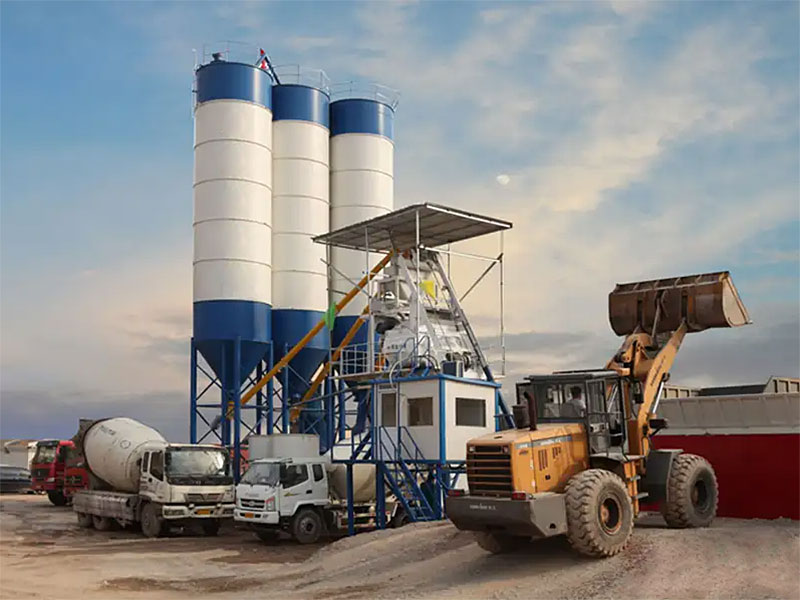
Precision is essential for creating durable concrete. For plant operators and managers, the main challenge is maintaining accuracy and consistency across every load, as even minor deviations in water content can significantly weaken the final product’s strength and slump.
Understanding the Concrete Batching Process
At its core, concrete batching is the process of weighing and combining ingredients to create a homogeneous mix. While the scale of operation varies, the fundamental components remain the same. The process typically involves aggregates (sand and gravel), cementitious materials (cement, fly ash, slag), water, and chemical admixtures.
The “batch” is defined by a specific recipe, or mix design, engineered to meet the structural requirements of a project. The plant’s control system commands the weighing of these materials into hoppers before they are discharged into a mixer or a transit mixer truck.
The complexity lies in the timing and sequencing. Gates must open and close at exact moments. Conveyors must run at specific speeds. If a weigh hopper retains a few pounds of material after discharge, or if a cement valve leaks, the recipe is compromised. Understanding these mechanical interactions is the first step toward controlling them.
The High Cost of Inaccuracy
Why is precision so critical? The consequences of poor batching extend far beyond a bad day at the plant.
Structural Integrity and Safety
The most critical reason for accuracy is the performance of the hardened concrete. If a batch contains too much water or insufficient cement, the water-to-cement ratio increases, significantly reducing the concrete’s strength and durability. This can lead to cracking, spalling, or in extreme cases, structural failure.
Financial Implications
Inaccuracy is expensive. When a plant cannot guarantee consistency, operators often “over-design” the mix, adding extra cement to ensure they meet minimum strength requirements. This practice, known as over-yielding, eats directly into profit margins. Cement is the most expensive ingredient in the mix; giving it away for free to compensate for poor equipment or processes is a costly safety net.
Furthermore, if a load arrives at a job site and fails a slump test or is rejected by the project engineer, the costs are immediate. The producer pays for the wasted material, the fuel, the driver’s time, and potentially the cost of removing and re-pouring the defective concrete.
Factors That Kill Consistency
Even with a perfect mix design, several external variables can disrupt consistency.
Material Variations
Aggregates are natural materials, and they are rarely uniform. A delivery of sand today might have a different fineness modulus than the delivery from last week. Changes in the gradation of rock and sand affect how much water the mix requires to reach the desired workability.
Moisture Content
This is arguably the single biggest disruptor in concrete batching. Aggregates act like sponges. If it rains on your stockpiles, the sand can hold a significant amount of water. If the batching system does not account for this “free water” already present in the sand, and adds the full amount of design water, the resulting concrete will be soup. Conversely, hot and dry weather can suck moisture out of aggregates, leading to a mix that is too dry and difficult to finish.
Equipment Drift
Scales and flow meters are mechanical devices that drift over time. Vibration, dust buildup, and general wear and tear can cause sensors to report inaccurate data. A scale reading 1,000 lbs might actually be holding 1,050 lbs, introducing a hidden error into every single batch.
Strategies for Improvement
Achieving consistency is a discipline. It requires regular intervention and a culture of quality control.
Rigorous Calibration Schedules
Don’t wait for a problem to arise before checking your scales. Implement a scheduled maintenance routine where all weigh hoppers, water meters, and admixture dispensers are calibrated. This should be done quarterly at a minimum, or more frequently for high-volume plants. Ensure that gates close tightly and that vibrators are working correctly to ensure all material is discharged from the hoppers.
Material Management
Managing your stockpiles can solve many moisture issues before they reach the plant. Keep stockpiles sloped to allow drainage. If possible, cover fine aggregates to protect them from sudden downpours. When loading the bins, try to work from the same area of the stockpile to avoid feeding the plant with material that has drastically different moisture levels from one bucket to the next.
Quality Control Testing
Testing shouldn’t just happen at the job site. Regular testing at the plant helps identify trends before they become rejections. visually inspecting loads, checking slump, and casting cylinders for compressive strength tests provide the data needed to adjust mix designs proactively.
The Role of Technology
The days of manual batching are largely behind us. Modern technology provides the tools necessary to combat the variables of nature and mechanics.
Automated Batching Systems
Computerized control systems are the brain of the operation. They can effectively eliminate human error in weighing and sequencing. Advanced logic in these systems can calculate “jog feeds”—pulsing the gates to add small amounts of material at the end of a weigh cycle to hit the target weight precisely.
Whether you are operating a massive stationary facility or a compact mobile concrete batch plant, technology ensures the mix remains uniform from the first yard to the last. These systems can store hundreds of mix designs and record the exact weight of every ingredient used in every batch, providing a digital paper trail for quality assurance.
Microwave Moisture Sensors
To tackle the moisture problem, many producers utilize microwave moisture sensors installed directly in the aggregate bins or on the conveyor belts. These sensors read the moisture content of the sand in real-time. The control system then automatically subtracts the free water found in the sand from the batch water and adds extra sand to compensate for the weight of the water. This dynamic adjustment happens instantly, ensuring the water-cement ratio stays perfect regardless of the weather.
Maintaining Purity and Air Quality
Accuracy also involves keeping contaminants out. Dust collection systems are vital not just for environmental compliance, but for batch purity. By capturing cement dust that would otherwise escape during pneumatic filling or batching, you ensure that the material you paid for ends up in the truck, not in the air. Furthermore, keeping sensors and optical eyes free of dust ensures the equipment operates as intended.
Conclusion
In the construction industry, reputation depends on the quality of every pour. Investing in batching accuracy and consistency helps producers reduce waste and increase profitability. By using modern technology to manage mechanical and environmental factors, producers can ensure their concrete is reliable and durable.
